

Digital banking, both personal and business, has made managing money far more convenient than in the past. From splitting a dinner bill to paying your child’s music teacher to reimbursing a friend, peer-to-peer (P2P) payment apps like Venmo and Cash App allow you to send money with just a few clicks. But while these apps are convenient, they can pose risks if you don’t take precautions. Let’s take a closer look at how P2P apps work, what to watch out for, and how to keep your money safe when transferring funds online.
What Are P2P Payment Apps?
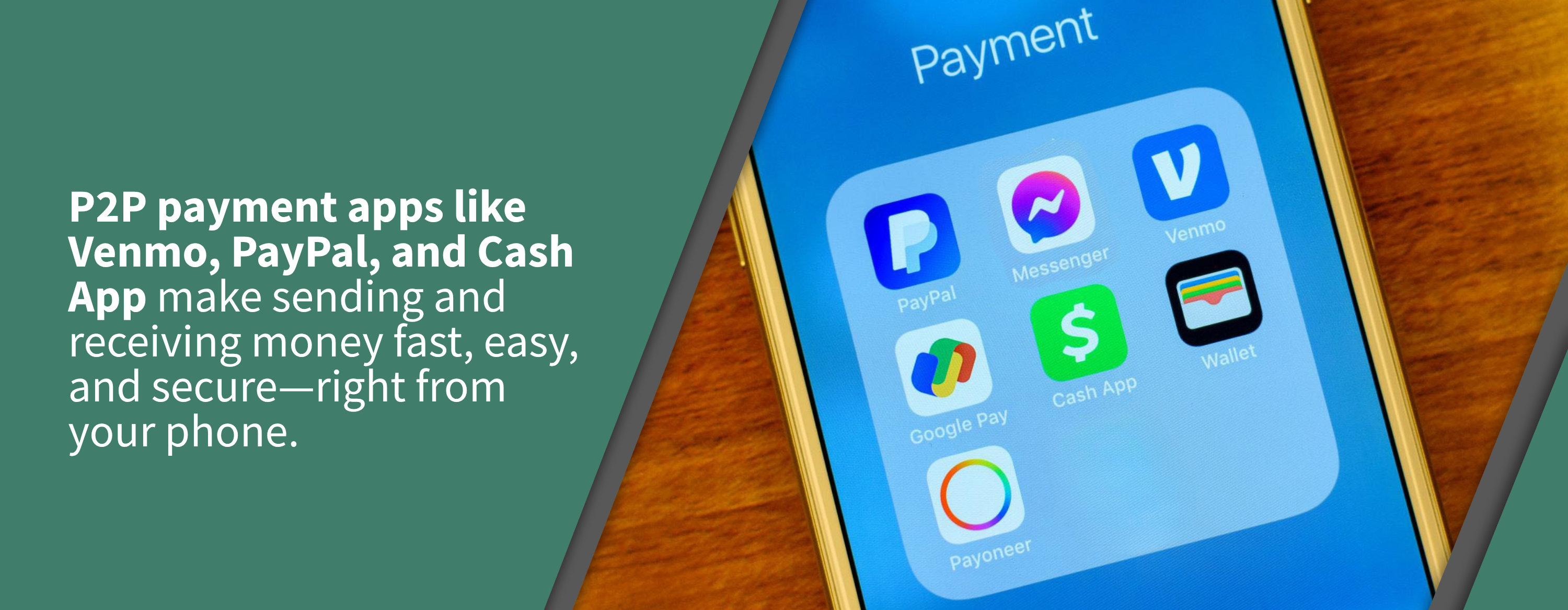
P2P payment apps allow users to send and receive money from one bank account to another through a mobile app. The apps are linked to your debit card or checking account, and enables quick and easy money transfers.
Some of the most popular P2P apps include:
- Venmo. Venmo offers social features that allow users to share transactions with friends. Users can like and comment on public transactions. There is the option of making a transaction private.
- Cash App. In addition to easy fund transfers, Cash App offers additional features like investing and Bitcoin purchasing.
Each platform operates slightly differently, but they all make transferring money quick and seamless.
The Convenience of P2P Apps
P2P apps have changed how we manage our everyday spending. Here are some of the biggest benefits:
- Speed: Money transfers are usually completed within a few minutes.
- Accessibility: You can transfer money from anywhere using your smartphone.
- Simplicity: You no longer need to carry cash, write checks, or pull out your debit/credit card.
- Flexibility: Besides sending money to contacts, many P2P apps now allow payments for small businesses and gig services.
Most P2P users are already versed in mobile banking. These apps offer a natural extension of the mobile banking experience. When linked to a JSB checking account, they can further streamline your spending.
The Hidden Risks of P2P Payments
P2P apps are convenient, but they carry risks. The biggest risk is that unlike credit card transactions, P2P transfers are often instant and irreversible. This means that once you send money, it is extremely difficult, if not impossible, to get it back.
Here are a few of the most common risks to be aware of:
1. Scams and Fraud
Scammers might pose as buyers, sellers, or even customer service representatives. Generally, these scammers will strive to appear as legitimate as possible. They can request payment through P2P and then vanish once they receive their money. For example, someone selling an item or tickets online might accept a Venmo payment and then stop responding once you send them the money.
2. Accidental Payments
If you mistype an email address or phone number, you can send funds to the wrong person. While many apps have multi-factor authentication available, especially for first-time payments between users, it is still possible to make mistakes. And once the money is sent, reversing the transaction can be challenging.
3. Account Compromise
P2P apps are tempting targets for hackers. They can gain access to your device or app credentials and send money without your authorization. Be wary of weak passwords, sending money through unsecured Wi-Fi connections, and phishing messages that can put your financial information at risk.
4. Privacy Concerns
Apps like Venmo make your transactions public by default, meaning that keeping them private requires an extra click. While it can be fun to see and comment on your friends’ transactions, it also exposes your transaction history to all of your connections within the app.
Best Practices for Mobile Payment Security
The good news is that despite these risks, protecting yourself while using P2P apps is relatively simple. Below are our top tips for staying safe while making P2P money transfers.
1. Only Send Money to People You Know and Trust
Use P2P apps to send money to your friends, family, or verified contacts. Avoid using these apps to send funds to people you don’t know—online sellers, strangers, or people claiming to be from the bank or another agency.
2. Double-Check Recipient Details
Verify the recipient’s name, email, and phone number. Ensure there are no typos that could result in sending money to the wrong person.
3. Enable Strong Security Settings
Most P2P apps offer multi-factor authentication or PIN verification. Make sure these are enabled to protect yourself if your phone is lost or stolen.
4. Use Private Wi-Fi Connections
Wi-Fi networks in public places, such as cafes or airports, might offer faster speeds, but they put your data at risk. It’s better to send money via mobile data or your secure home Wi-Fi.
5. Keep Your App and Device Updated
Install updates regularly. This will provide you with the latest security patches and bug fixes.
6. Review Your Transaction History Often
Log into your P2P app frequently to review transactions. Report any suspicious activity to your bank as soon as you notice it.
7. Be Skeptical of Unsolicited Requests
If you receive a request for payment—either through the app or through a text or call—don’t send the money until you verify that it is legitimate. It may be that a contact has been hacked, or scammers are impersonating a contact in order to look legitimate.
P2P Payments for Small Businesses: Use with Caution
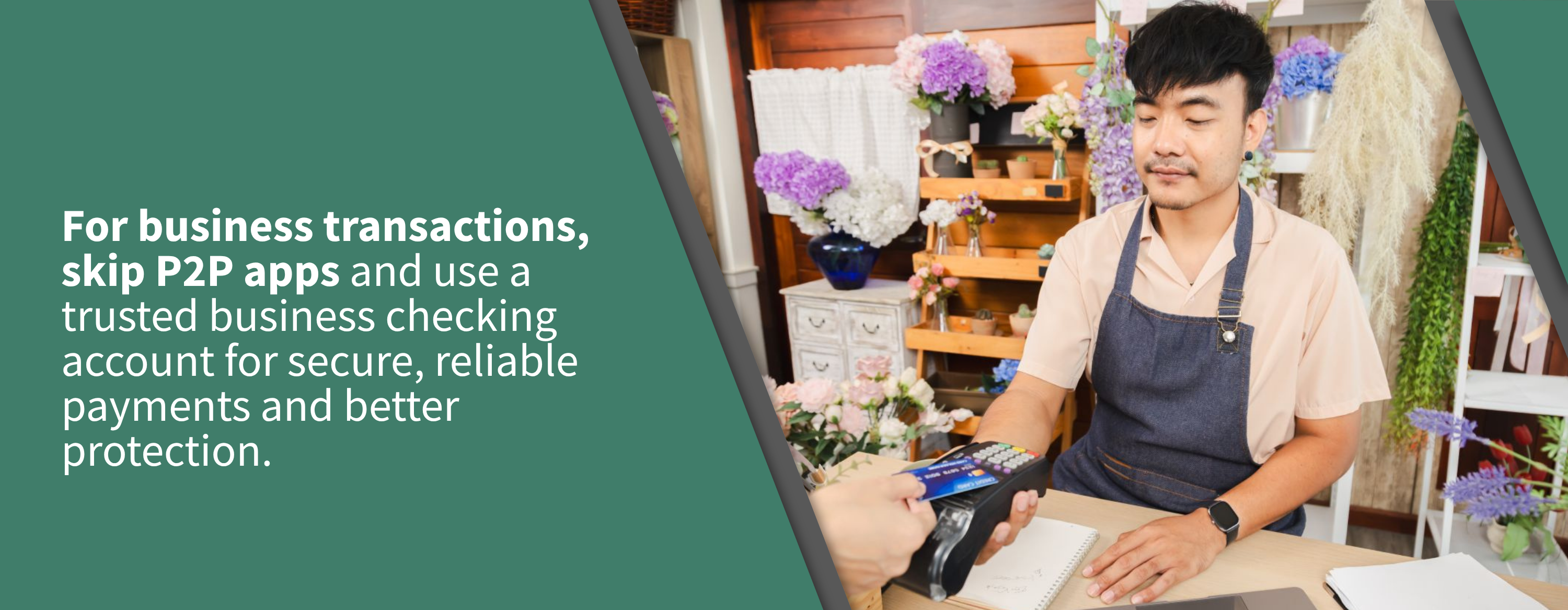
Some small business owners use P2P apps for quick transactions. It’s important to understand that most P2P apps are not intended for business use, and they don’t provide the same protection as more traditional business banking services.
If you’re a West Virginia business owner, Jefferson Security Bank offers business checking services that allow you to manage your payments, with added security benefits.
A bank-supported business account is always a safer choice for business transactions than P2P apps.
Protecting Your Finances with JSB’s Digital Banking Tools
At Jefferson Security Bank, we provide secure, user-friendly digital banking solutions designed to help you manage your money safely. You can have control and confidence whether you bank on your phone, computer, or tablet.
Our mobile banking services include:
- Money transfers
- Online bill pay
- Check deposits
- Secure authentication
In addition, JSB’s card services are available to help you in case of fraudulent card activity. Be sure to contact us as soon as you notice suspicious activity on your account. For more information on keeping your account safe, we offer this Guide to Responsible Credit Card Use that has even more tips and best practices.
P2P apps can make your banking life easier, but only when used smartly. Take the extra precautions before sending your next payment to keep your funds secure. If you have questions about money transfers or want to speak to a banking professional, contact the team at Jefferson Security Bank.
Call or visit one of our convenient locations in Shepherdstown, Charles Town, Martinsburg, Inwood, or Sharpsburg to learn more about our digital banking solutions. You can also explore our online resources to get started or open a personal or business checking account today!